|
InChI
|

|
|
InChI
|
|
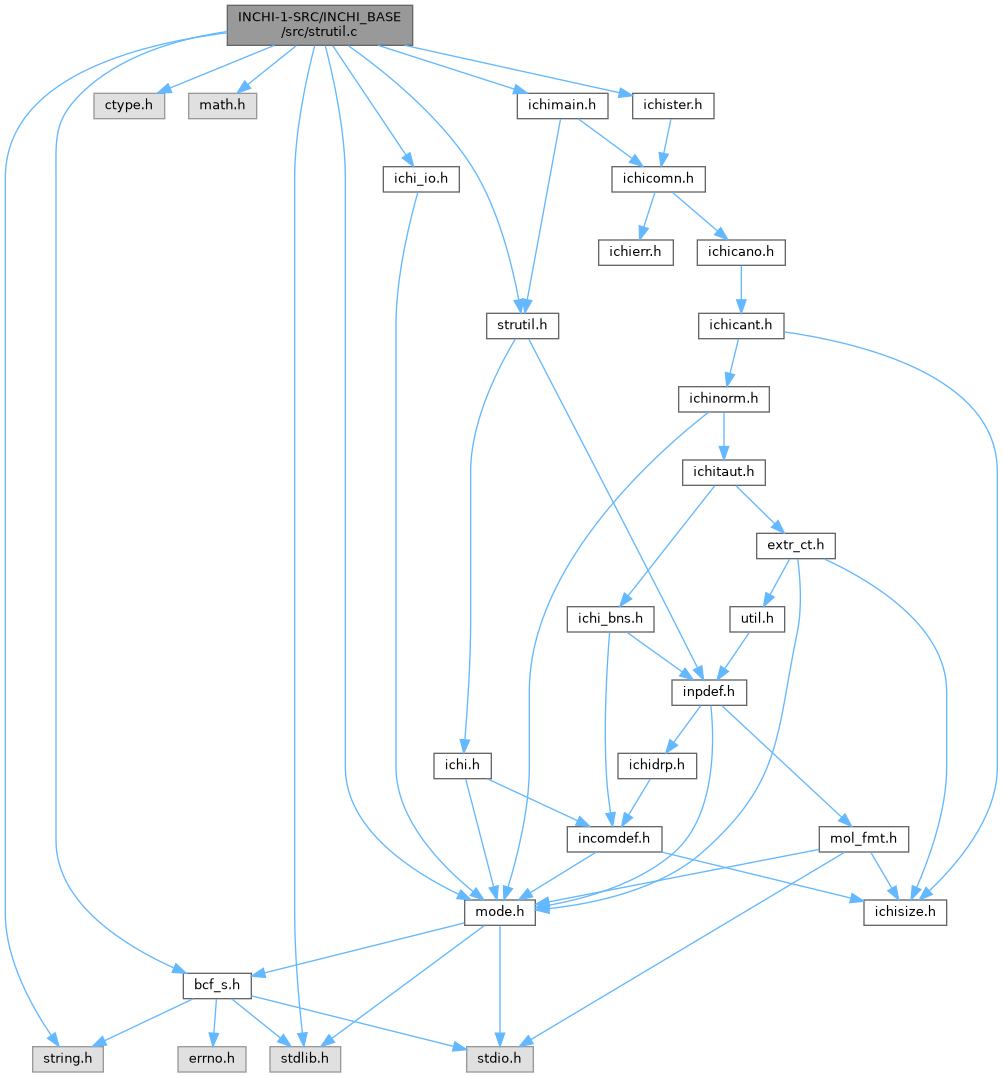
#include <stdlib.h>#include <string.h>#include <ctype.h>#include <math.h>#include <stdbool.h>#include <limits.h>#include "mode.h"#include "ichinorm.h"#include "strutil.h"#include "ichister.h"#include "ichi_io.h"#include "ichimain.h"#include "ichidrp.h"#include "bcf_s.h" Include dependency graph for strutil.c:
Data Structures | |
| struct | tagTreeAtom |
Macros | |
| #define | FIX_P_IV_Plus_O_Minus |
| #define | FIRST_NEIGHB2 4 |
| #define | FIRST_CENTER2 5 |
| #define | MAX_NEIGH 6 |
| #define | MIN_BOND_LENGTH (1.0e-6) |
| #define | MIN_COS (1.0e-6) |
| #define | MIN_BOND_LENGTH2 (MIN_BOND_LENGTH * MIN_BOND_LENGTH) |
| #define | MAX_BOND_LENGTH (1.0e30) |
| #define | NUM_SEGM 20 |
| #define | NUM_ELEMENTS 118 /* Adjust according to the number of elements in the array */ |
Typedefs | |
| typedef struct tagTreeAtom | tre_ATOM |
| typedef enum tagIonAtomType | ION_ATOM_TYPE |
Enumerations | |
| enum | tagIonAtomType { IAT_H = 0 , IAT_C , IAT_N , IAT_P , IAT_O , IAT_S , IAT_Se , IAT_Te , IAT_F , IAT_Cl , IAT_Br , IAT_I , IAT_MAX = 12 } |
Functions | |
| int | insertions_sort_AT_RANK (AT_RANK *base, int num) |
| int | cmp_iso_atw_diff_component_no (const void *a1, const void *a2) |
| int | cmp_components (const void *a1, const void *a2) |
| INChI_Stereo * | Alloc_INChI_Stereo (int num_at, int num_bonds) |
| static int | is_only_HDT_neighbors (const inp_ATOM *at, int num_atoms, int metal_idx) |
| int | RemoveInpAtBond (inp_ATOM *at, int iat, int k) |
| int | DisconnectInpAtBond (inp_ATOM *at, AT_NUMB *nOldCompNumber, int iat, int neigh_ord) |
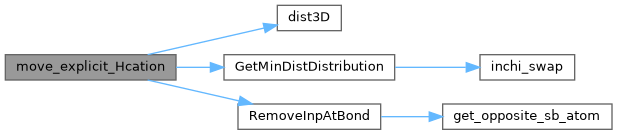
| int | move_explicit_Hcation (inp_ATOM *at, int num_at, int iat, int iat_H, int bInAllComponents) |
| int | DisconnectOneLigand (inp_ATOM *at, AT_NUMB *nOldCompNumber, S_CHAR *bMetal, char *elnumber_Heteroat, int num_halogens, int num_atoms, int iMetal, int jLigand, INCHI_MODE *bTautFlagsDone) |
| int | bIsAmmoniumSalt (inp_ATOM *at, int i, int *piO, int *pk, S_CHAR *num_explicit_H) |
| int | DisconnectAmmoniumSalt (inp_ATOM *at, int i, int iO, int k, S_CHAR *num_explicit_H) |
| int | DisconnectMetalSalt (inp_ATOM *at, int i) |
| int | bIsMetalToDisconnect (inp_ATOM *at, int i, int bCheckMetalValence) |
| int | get_iat_number (int el_number) |
| int | tot_unsat (int unsat[]) |
| int | max_unsat (int unsat[]) |
| double | dist3D (inp_ATOM *at1, inp_ATOM *at2) |
| double | dist2D (inp_ATOM *at1, inp_ATOM *at2) |
| double | dist_from_segm (double x, double y, double x1, double y1, double x2, double y2) |
| int | segments_intersect (double x11, double y11, double x12, double y12, double x21, double y21, double x22, double y22) |
| double | GetMinDistDistribution (inp_ATOM *at, int num_at, int iat, int iat_H, int bInAllComponents, double min_dist[], int num_segm) |
| int | nFindOneOM (inp_ATOM *at, int at_no, int ord_OM[], int num_OM) |
| int | the_only_doublet_neigh (inp_ATOM *at, int i1, int *ineigh1, int *ineigh2) |
| int | fix_non_uniform_drawn_oxoanions (int num_atoms, inp_ATOM *at, int *num_changes) |
| int | fix_non_uniform_drawn_amidiniums (int num_atoms, inp_ATOM *at, int *num_changes) |
| void | add_bond_if_unseen (subgraf_pathfinder *spf, int node0, int node, int *nbonds, int **bonds) |
| int | fix_odd_things (int num_atoms, inp_ATOM *at, int bFixBug, int bFixNonUniformDraw) |
| Fix odd things in the input atoms. | |
| int | post_fix_odd_things (int num_atoms, inp_ATOM *at) |
| Post-fix odd things in the input atoms (does nothing, returns 0) | |
| int | remove_ion_pairs (int num_atoms, inp_ATOM *at) |
| Remove ion pairs from the input atoms. | |
| int | bIsMetalSalt (inp_ATOM *at, int i) |
| Check if atom is a metal salt. | |
| int | DisconnectSalts (ORIG_ATOM_DATA *orig_inp_data, int bDisconnect) |
| Disconnect salts in the original atom data. | |
| int | bMayDisconnectMetals (ORIG_ATOM_DATA *orig_inp_data, int bCheckMetalValence, INCHI_MODE *bTautFlagsDone) |
| Check if metals may be disconnected in the original atom data. | |
| int | DisconnectMetals (ORIG_ATOM_DATA *orig_inp_data, int bCheckMetalValence, INCHI_MODE *bTautFlagsDone) |
| Disconnect metals in the original atom data. | |
| int | add_DT_to_num_H (int num_atoms, inp_ATOM *at) |
| int | remove_terminal_HDT (int num_atoms, inp_ATOM *at, int bFixTermHChrg) |
| int | getElValenceforMolecularInorganics (int nPeriodicNum, int charge, int val_num) |
| int | getElTypeforMolecularInorganics (int nPeriodicNum) |
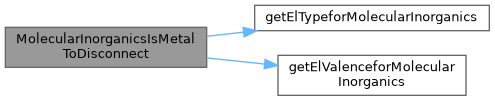
| int | MolecularInorganicsIsMetalToDisconnect (inp_ATOM *at, int atom_idx) |
| int | shouldBondBeCut (int atom1, int atom2) |
| void | updateNeighborListMolecularInorganics (inp_ATOM *at, int atom_idx, int neighbor_idx) |
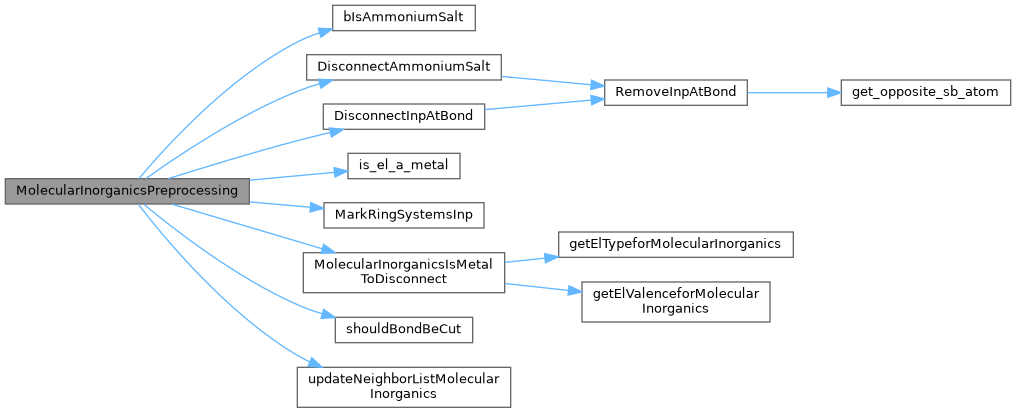
| int | MolecularInorganicsPreprocessing (ORIG_ATOM_DATA *orig_at_data, INPUT_PARMS *ip) |
| int | bHeteroAtomMayHaveXchgIsoH (inp_ATOM *atom, int iat) |
| Checks whether a hetero atom may have exchangeable isotopic hydrogens. | |
| int | bNumHeterAtomHasIsotopicH (inp_ATOM *atom, int num_atoms) |
| Check if hetero atoms has isotopic hydrogens. | |
| int | get_canonical_atom_number (const INChI_Aux *aux, int orig_atom_num) |
| Get the canonical atom number from original atom number. | |
| int | get_parity_idx_from_canonical_atom_number (int canon_atom_num, const AT_NUMB *nNumber, int nof_atoms) |
| Get the parity idx from canonical atom number object. | |
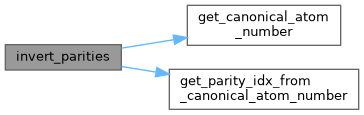
| int | invert_parities (const INChI *inchi, const INChI_Aux *aux, int **list_atoms, int nof_lists, int is_absolute) |
| Invert the parities for enhanced stereochemistry t- and m-layers. | |
| int | set_EnhancedStereo_t_m_layers (const ORIG_ATOM_DATA *orig_inp_data, const INChI *inchi, const INChI_Aux *aux) |
| Set the enhanced stereochemistry information for t- and m-layers. | |
| int | MarkDisconnectedComponents (ORIG_ATOM_DATA *orig_at_data, int bProcessOldCompNumbers) |
| Mark disconnected components in the original atom data. | |
| int | ExtractConnectedComponent (inp_ATOM *at, int num_at, int component_number, inp_ATOM *component_at) |
| Extract one (connected) component. | |
| int | SetConnectedComponentNumber (inp_ATOM *at, int num_at, int component_number) |
| Set the Connected Component Number object. | |
| int | Free_INChI_Stereo (INChI_Stereo *pINChI_Stereo) |
| Free INChI_Stereo data structure. | |
| int | Free_INChI (INChI **ppINChI) |
| Free INChI data structure. | |
| int | Free_INChI_Members (INChI *pINChI) |
| Free INChI members. | |
| INChI * | Alloc_INChI (inp_ATOM *at, int num_at, int *found_num_bonds, int *found_num_isotopic, int nAllocMode) |
| Allocate INChI data structure. | |
| int | Free_INChI_Aux (INChI_Aux **ppINChI_Aux) |
| Free INChI_Aux data structure. | |
| INChI_Aux * | Alloc_INChI_Aux (int num_at, int num_isotopic_atoms, int nAllocMode, int bOrigCoord) |
| Allocate AuxInfo data structure. | |
| void | CompAtomData_GetNumMapping (COMP_ATOM_DATA *adata, int *orig_num, int *curr_num) |
| int | imat_new (int m, int n, int ***a) |
| Allocate integer matrix. | |
| void | imat_free (int m, int **a) |
| Free integer matrix. | |
| subgraf * | subgraf_new (ORIG_ATOM_DATA *orig_inp_data, int nnodes, int *nodes) |
| Create graph from atom data. | |
| void | subgraf_free (subgraf *sg) |
| Free graph data structure. | |
| void | subgraf_debug_trace (subgraf *sg) |
| Debug graph data structure. | |
| subgraf_pathfinder * | subgraf_pathfinder_new (subgraf *sg, ORIG_ATOM_DATA *orig_inp_data, int start, int end) |
| Allocate new graph pathfinder data structure. | |
| void | subgraf_pathfinder_free (subgraf_pathfinder *spf) |
| Frees subgraph pathfinder data structure. | |
| void | subgraf_pathfinder_run (subgraf_pathfinder *spf, int nforbidden, int *forbidden, int *nbonds, int **bonds, int *natoms, int *atoms) |
| Find path(s) from subgraf node spf->start to spf->end and fill bonds[nbonds] and atoms[natoms]. Does not traverse through supplied forbidden edges (if not zero/NULL) | |
| int | subgraf_pathfinder_collect_all (subgraf_pathfinder *spf, int nforbidden, int *forbidden, int *atnums) |
| Collects atom numbers along path. | |
| void | PrintFileName (const char *fmt, FILE *out_file, const char *szFname) |
| Print the file name. | |
| #define FIRST_CENTER2 5 |
| #define FIRST_NEIGHB2 4 |
| #define FIX_P_IV_Plus_O_Minus |
| #define MAX_BOND_LENGTH (1.0e30) |
| #define MAX_NEIGH 6 |
| #define MIN_BOND_LENGTH (1.0e-6) |
| #define MIN_BOND_LENGTH2 (MIN_BOND_LENGTH * MIN_BOND_LENGTH) |
| #define MIN_COS (1.0e-6) |
| #define NUM_ELEMENTS 118 /* Adjust according to the number of elements in the array */ |
| #define NUM_SEGM 20 |
| typedef enum tagIonAtomType ION_ATOM_TYPE |
| typedef struct tagTreeAtom tre_ATOM |
| enum tagIonAtomType |
| void add_bond_if_unseen | ( | subgraf_pathfinder * | spf, |
| int | node0, | ||
| int | node, | ||
| int * | nbonds, | ||
| int ** | bonds | ||
| ) |
Here is the call graph for this function: Here is the caller graph for this function:| int add_DT_to_num_H | ( | int | num_atoms, |
| inp_ATOM * | at | ||
| ) |
Here is the caller graph for this function:| INChI * Alloc_INChI | ( | inp_ATOM * | at, |
| int | num_at, | ||
| int * | found_num_bonds, | ||
| int * | found_num_isotopic, | ||
| int | nAllocMode | ||
| ) |
Allocate INChI data structure.
| at | Pointer to atom array |
| num_at | Number of atoms |
| found_num_bonds | Pointer to number of bonds |
| found_num_isotopic | Pointer to number of isotopic atoms |
| nAllocMode | Allocation mode |
Here is the call graph for this function: Here is the caller graph for this function:| INChI_Aux * Alloc_INChI_Aux | ( | int | num_at, |
| int | num_isotopic_atoms, | ||
| int | nAllocMode, | ||
| int | bOrigData | ||
| ) |
Allocate AuxInfo data structure.
| num_at | Number of atoms |
| num_isotopic_atoms | Number of isotopic atoms |
| nAllocMode | Allocation mode |
| bOrigData | Flag indicating if the atom data is original |
Here is the call graph for this function: Here is the caller graph for this function:| INChI_Stereo * Alloc_INChI_Stereo | ( | int | num_at, |
| int | num_bonds | ||
| ) |
Here is the call graph for this function: Here is the caller graph for this function:| int bHeteroAtomMayHaveXchgIsoH | ( | inp_ATOM * | atom, |
| int | iat | ||
| ) |
Checks whether a hetero atom may have exchangeable isotopic hydrogens.
| atom | Pointer to atom list |
| iat | Atom number |
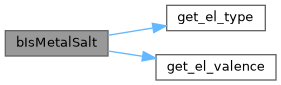
Here is the call graph for this function: Here is the caller graph for this function: Here is the caller graph for this function:| int bIsMetalSalt | ( | inp_ATOM * | at, |
| int | i | ||
| ) |
Check if atom is a metal salt.
| at | Pointer to atom array |
| i | atom index |
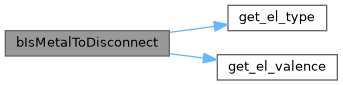
Here is the call graph for this function: Here is the caller graph for this function:| int bIsMetalToDisconnect | ( | inp_ATOM * | at, |
| int | i, | ||
| int | bCheckMetalValence | ||
| ) |
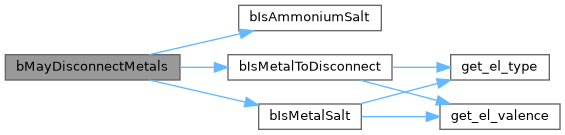
Here is the call graph for this function: Here is the caller graph for this function:| int bMayDisconnectMetals | ( | ORIG_ATOM_DATA * | orig_inp_data, |
| int | bCheckMetalValence, | ||
| INCHI_MODE * | bTautFlagsDone | ||
| ) |
Check if metals may be disconnected in the original atom data.
| orig_inp_data | Pointer to original atom data structure |
| bCheckMetalValence | Flag indicating whether to check metal valence |
| bTautFlagsDone | Pointer to tautomeric flags done |
Here is the call graph for this function: Here is the caller graph for this function:| int bNumHeterAtomHasIsotopicH | ( | inp_ATOM * | atom, |
| int | num_atoms | ||
| ) |
Check if hetero atoms has isotopic hydrogens.
| atom | Pointer to atom array |
| num_atoms | Number of atoms |
Here is the call graph for this function: Here is the caller graph for this function:| int cmp_components | ( | const void * | a1, |
| const void * | a2 | ||
| ) |
Here is the caller graph for this function:| int cmp_iso_atw_diff_component_no | ( | const void * | a1, |
| const void * | a2 | ||
| ) |
Here is the caller graph for this function:| void CompAtomData_GetNumMapping | ( | COMP_ATOM_DATA * | adata, |
| int * | orig_num, | ||
| int * | curr_num | ||
| ) |
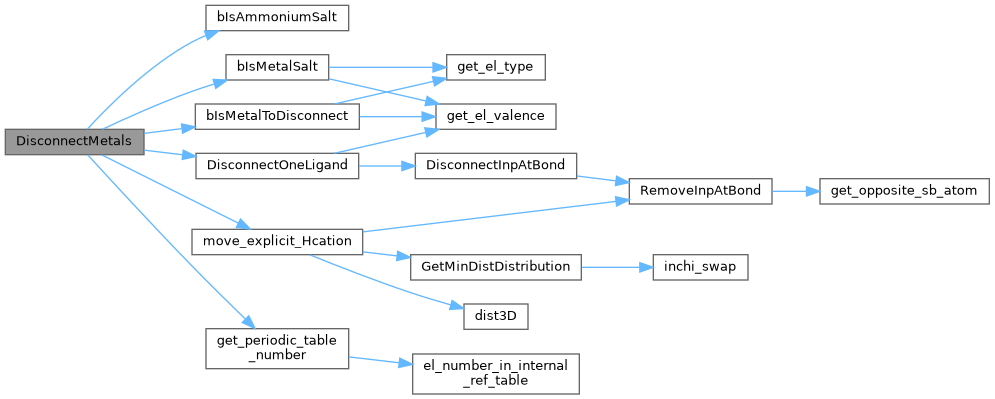
Here is the caller graph for this function: Here is the call graph for this function: Here is the caller graph for this function: Here is the call graph for this function: Here is the caller graph for this function:| int DisconnectMetals | ( | ORIG_ATOM_DATA * | orig_inp_data, |
| int | bCheckMetalValence, | ||
| INCHI_MODE * | bTautFlagsDone | ||
| ) |
Disconnect metals in the original atom data.
| orig_inp_data | Pointer to original atom data structure |
| bCheckMetalValence | Flag indicating whether to check metal valence |
| bTautFlagsDone | Pointer to tautomeric flags done |
Here is the call graph for this function: Here is the caller graph for this function:| int DisconnectMetalSalt | ( | inp_ATOM * | at, |
| int | i | ||
| ) |
Here is the caller graph for this function:| int DisconnectOneLigand | ( | inp_ATOM * | at, |
| AT_NUMB * | nOldCompNumber, | ||
| S_CHAR * | bMetal, | ||
| char * | elnumber_Heteroat, | ||
| int | num_halogens, | ||
| int | num_atoms, | ||
| int | iMetal, | ||
| int | jLigand, | ||
| INCHI_MODE * | bTautFlagsDone | ||
| ) |
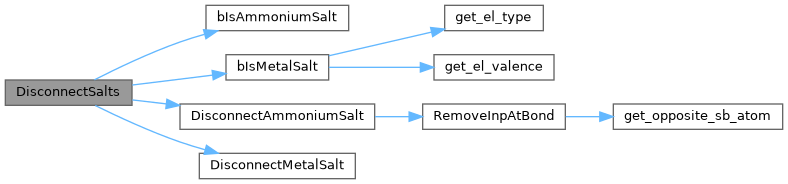
Here is the call graph for this function: Here is the caller graph for this function:| int DisconnectSalts | ( | ORIG_ATOM_DATA * | orig_inp_data, |
| int | bDisconnect | ||
| ) |
Disconnect salts in the original atom data.
| orig_inp_data | Pointer to original atom data structure |
| bDisconnect | Flag indicating whether to disconnect salts |
Here is the call graph for this function: Here is the caller graph for this function:| double dist_from_segm | ( | double | x, |
| double | y, | ||
| double | x1, | ||
| double | y1, | ||
| double | x2, | ||
| double | y2 | ||
| ) |
| int ExtractConnectedComponent | ( | inp_ATOM * | at, |
| int | num_at, | ||
| int | component_number, | ||
| inp_ATOM * | component_at | ||
| ) |
Extract one (connected) component.
| at | Pointer to atom array |
| num_at | Number of atoms |
| component_number | Component number |
| component_at | Pointer to component atom array |
Here is the caller graph for this function:| int fix_non_uniform_drawn_amidiniums | ( | int | num_atoms, |
| inp_ATOM * | at, | ||
| int * | num_changes | ||
| ) |
Here is the caller graph for this function:| int fix_non_uniform_drawn_oxoanions | ( | int | num_atoms, |
| inp_ATOM * | at, | ||
| int * | num_changes | ||
| ) |
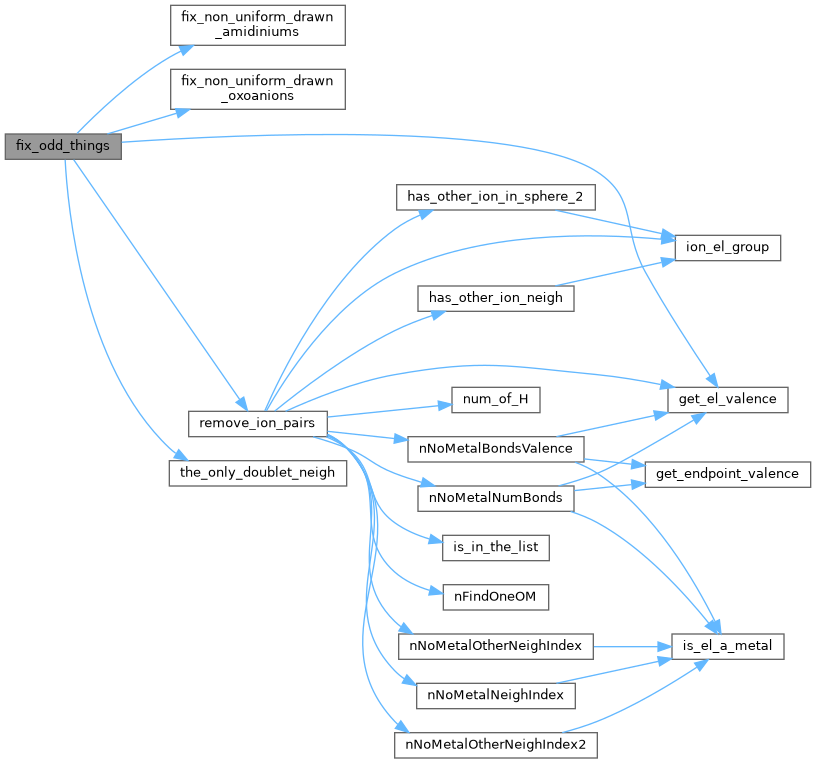
Here is the caller graph for this function:| int fix_odd_things | ( | int | num_atoms, |
| inp_ATOM * | at, | ||
| int | bFixBug, | ||
| int | bFixNonUniformDraw | ||
| ) |
Fix odd things in the input atoms.
| num_atoms | Number of input atoms |
| at | Array of input atoms |
| bFixBug | Flag indicating whether to fix bugs |
| bFixNonUniformDraw | Flag indicating whether to fix non-uniform drawing |
Here is the call graph for this function: Here is the caller graph for this function:| int Free_INChI | ( | INChI ** | ppINChI | ) |
Free INChI data structure.
| ppINChI | Pointer to INChI data structure |
Here is the call graph for this function: Here is the caller graph for this function:| int Free_INChI_Aux | ( | INChI_Aux ** | ppINChI_Aux | ) |
Free INChI_Aux data structure.
| ppINChI_Aux | Pointer to INChI_Aux data structure |
Here is the caller graph for this function:| int Free_INChI_Members | ( | INChI * | pINChI | ) |
Free INChI members.
| pINChI | Pointer to INChI data structure |
Here is the call graph for this function: Here is the caller graph for this function:| int Free_INChI_Stereo | ( | INChI_Stereo * | pINChI_Stereo | ) |
Free INChI_Stereo data structure.
| pINChI_Stereo | Pointer to INChI_Stereo |
Here is the caller graph for this function:| int get_canonical_atom_number | ( | const INChI_Aux * | aux, |
| int | orig_atom_num | ||
| ) |
Get the canonical atom number from original atom number.
Get the canonical atom number object.
| aux | Pointer to INChI auxiliary data |
| orig_atom_num | Original atom number |
Here is the caller graph for this function:| int get_iat_number | ( | int | el_number | ) |
Here is the caller graph for this function:| int get_parity_idx_from_canonical_atom_number | ( | int | canon_atom_num, |
| const AT_NUMB * | nNumber, | ||
| int | nof_atoms | ||
| ) |
Get the parity idx from canonical atom number object.
Get the parity index from canonical atom number.
| canon_atom_num | Canonical atom number |
| nNumber | Pointer to array of canonical atom numbers |
| nof_atoms | Number of atoms |
Here is the caller graph for this function:| int getElTypeforMolecularInorganics | ( | int | nPeriodicNum | ) |
Here is the caller graph for this function:| int getElValenceforMolecularInorganics | ( | int | nPeriodicNum, |
| int | charge, | ||
| int | val_num | ||
| ) |
Here is the caller graph for this function:| double GetMinDistDistribution | ( | inp_ATOM * | at, |
| int | num_at, | ||
| int | iat, | ||
| int | iat_H, | ||
| int | bInAllComponents, | ||
| double | min_dist[], | ||
| int | num_segm | ||
| ) |
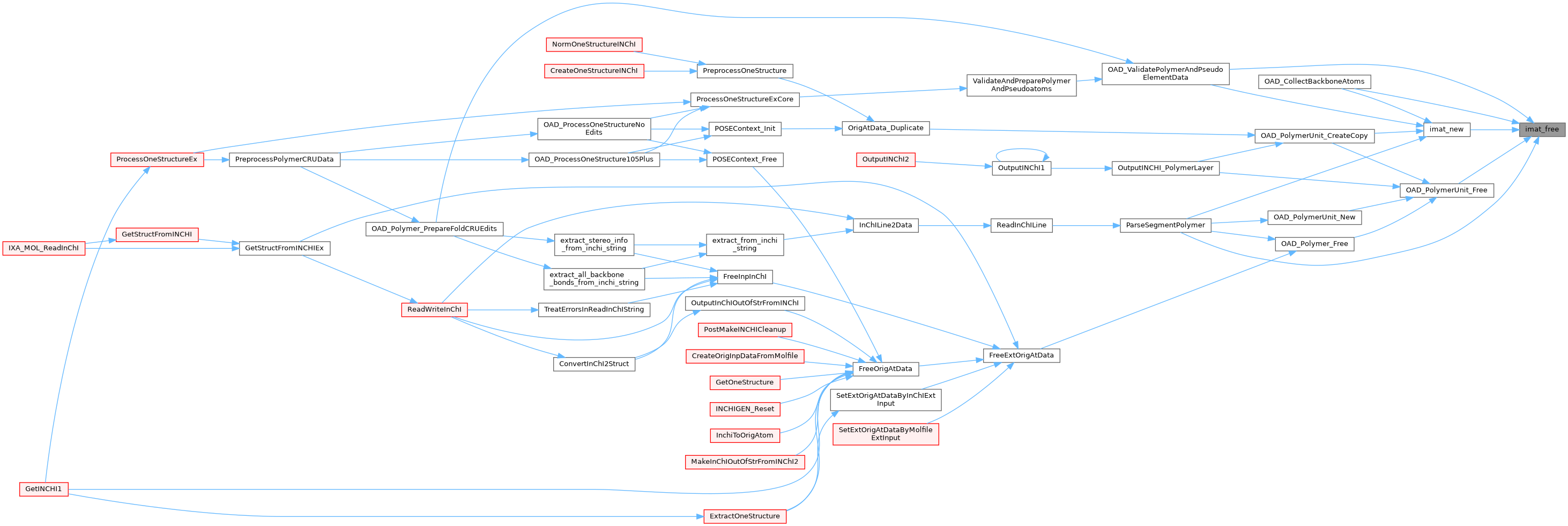
Here is the call graph for this function: Here is the caller graph for this function:| void imat_free | ( | int | m, |
| int ** | a | ||
| ) |
Free integer matrix.
| m | Size of matrix |
| a | Pointer to matrix |
Here is the caller graph for this function:| int imat_new | ( | int | m, |
| int | n, | ||
| int *** | a | ||
| ) |
Allocate integer matrix.
| m | Size of matrix |
| n | Size of matrix |
| a | Pointer to matrix |
Here is the call graph for this function: Here is the caller graph for this function:| int insertions_sort_AT_RANK | ( | AT_RANK * | base, |
| int | num | ||
| ) |
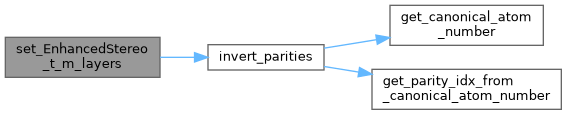
Here is the caller graph for this function:| int invert_parities | ( | const INChI * | inchi, |
| const INChI_Aux * | aux, | ||
| int ** | list_atoms, | ||
| int | nof_lists, | ||
| int | is_absolute | ||
| ) |
Invert the parities for enhanced stereochemistry t- and m-layers.
| inchi | Pointer to INChI structure |
| aux | Pointer to INChI auxiliary data |
| list_atoms | Pointer to list of atom lists for abs, rel or rac information |
| nof_lists | Number of lists |
| is_absolute | Flag indicating if processing absolute stereochemistry |
Here is the call graph for this function: Here is the caller graph for this function:
|
static |
Here is the caller graph for this function:| int MarkDisconnectedComponents | ( | ORIG_ATOM_DATA * | orig_at_data, |
| int | bProcessOldCompNumbers | ||
| ) |
Mark disconnected components in the original atom data.
| orig_at_data | Pointer to original atom data structure |
| bProcessOldCompNumbers | Flag indicating whether to process old component numbers |
Here is the call graph for this function: Here is the caller graph for this function:| int max_unsat | ( | int | unsat[] | ) |
| int MolecularInorganicsIsMetalToDisconnect | ( | inp_ATOM * | at, |
| int | atom_idx | ||
| ) |
Here is the call graph for this function: Here is the caller graph for this function:| int MolecularInorganicsPreprocessing | ( | ORIG_ATOM_DATA * | orig_at_data, |
| INPUT_PARMS * | ip | ||
| ) |
Here is the call graph for this function: Here is the caller graph for this function:| int move_explicit_Hcation | ( | inp_ATOM * | at, |
| int | num_at, | ||
| int | iat, | ||
| int | iat_H, | ||
| int | bInAllComponents | ||
| ) |
Here is the call graph for this function: Here is the caller graph for this function:| int nFindOneOM | ( | inp_ATOM * | at, |
| int | at_no, | ||
| int | ord_OM[], | ||
| int | num_OM | ||
| ) |
Here is the caller graph for this function:| int post_fix_odd_things | ( | int | num_atoms, |
| inp_ATOM * | at | ||
| ) |
Post-fix odd things in the input atoms (does nothing, returns 0)
| num_atoms | Number of input atoms |
| at | Array of input atoms |
Here is the caller graph for this function:| void PrintFileName | ( | const char * | fmt, |
| FILE * | out_file, | ||
| const char * | szFname | ||
| ) |
Print the file name.
| fmt | Format string |
| out_file | Output file pointer |
| szFname | File name string |
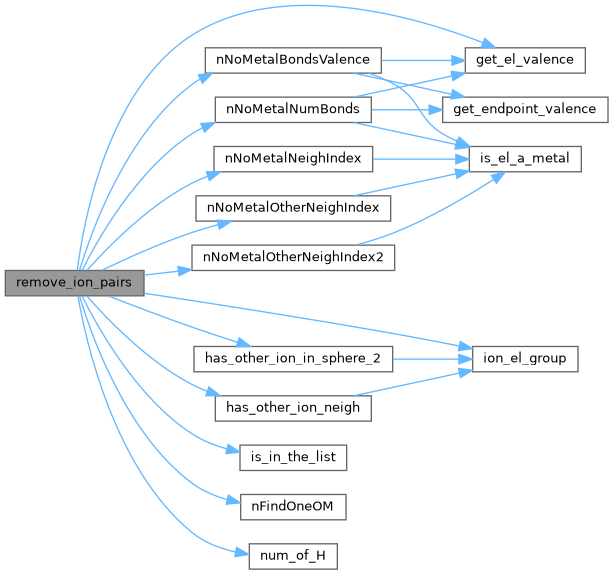
Here is the call graph for this function: Here is the caller graph for this function:| int remove_ion_pairs | ( | int | num_atoms, |
| inp_ATOM * | at | ||
| ) |
Remove ion pairs from the input atoms.
| num_atoms | Number of input atoms |
| at | Array of input atoms |
Here is the call graph for this function: Here is the caller graph for this function:| int remove_terminal_HDT | ( | int | num_atoms, |
| inp_ATOM * | at, | ||
| int | bFixTermHChrg | ||
| ) |
Here is the call graph for this function: Here is the caller graph for this function:| int RemoveInpAtBond | ( | inp_ATOM * | at, |
| int | iat, | ||
| int | k | ||
| ) |
Here is the call graph for this function: Here is the caller graph for this function:| int segments_intersect | ( | double | x11, |
| double | y11, | ||
| double | x12, | ||
| double | y12, | ||
| double | x21, | ||
| double | y21, | ||
| double | x22, | ||
| double | y22 | ||
| ) |
| int set_EnhancedStereo_t_m_layers | ( | const ORIG_ATOM_DATA * | orig_inp_data, |
| const INChI * | inchi, | ||
| const INChI_Aux * | aux | ||
| ) |
Set the enhanced stereochemistry information for t- and m-layers.
Set the enhanced stereochemistry for t- and m-layers.
| orig_inp_data | Pointer to original input atom data |
| inchi | Pointer to INChI structure |
| aux | Pointer to INChI auxiliary data |
Here is the call graph for this function: Here is the caller graph for this function:| int SetConnectedComponentNumber | ( | inp_ATOM * | at, |
| int | num_at, | ||
| int | component_number | ||
| ) |
Set the Connected Component Number object.
| at | Pointer to atom array |
| num_at | Number of atoms |
| component_number | Component number |
Here is the caller graph for this function:| int shouldBondBeCut | ( | int | atom1, |
| int | atom2 | ||
| ) |
Here is the caller graph for this function:| void subgraf_debug_trace | ( | subgraf * | sg | ) |
Debug graph data structure.
| sg | Pointer to graph |
| void subgraf_free | ( | subgraf * | sg | ) |
Free graph data structure.
| sg | Pointer to graph |
Here is the caller graph for this function:| subgraf * subgraf_new | ( | ORIG_ATOM_DATA * | orig_inp_data, |
| int | nnodes, | ||
| int * | nodes | ||
| ) |
Create graph from atom data.
| orig_inp_data | Pointer to original atom data |
| nnodes | Number of nodes |
| nodes | Pointer to nodes |
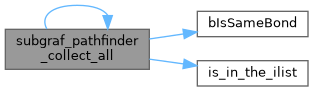
Here is the call graph for this function: Here is the caller graph for this function:| int subgraf_pathfinder_collect_all | ( | subgraf_pathfinder * | spf, |
| int | nforbidden, | ||
| int * | forbidden, | ||
| int * | atnums | ||
| ) |
Collects atom numbers along path.
| spf | Pointer to graph pathfinder data structure |
| nforbidden | Number of edges forbidden for traversal |
| forbidden | Pointer to forbidden edges |
| atnums | Pointer to atom numbers |
Here is the call graph for this function: Here is the caller graph for this function:| void subgraf_pathfinder_free | ( | subgraf_pathfinder * | spf | ) |
Frees subgraph pathfinder data structure.
| spf | Pointer to graph pathfinder data structure |
Here is the caller graph for this function:| subgraf_pathfinder * subgraf_pathfinder_new | ( | subgraf * | sg, |
| ORIG_ATOM_DATA * | orig_inp_data, | ||
| int | start, | ||
| int | end | ||
| ) |
Allocate new graph pathfinder data structure.
| sg | Pointer to graph |
| orig_inp_data | Pointer to original atom data |
| start | Starting node |
| end | End node |
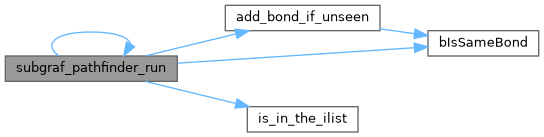
Here is the caller graph for this function:| void subgraf_pathfinder_run | ( | subgraf_pathfinder * | spf, |
| int | nforbidden, | ||
| int * | forbidden_orig, | ||
| int * | nbonds, | ||
| int ** | bonds, | ||
| int * | natoms, | ||
| int * | atoms | ||
| ) |
Find path(s) from subgraf node spf->start to spf->end and fill bonds[nbonds] and atoms[natoms]. Does not traverse through supplied forbidden edges (if not zero/NULL)
| spf | Pointer to graph pathfinder data structure |
| nforbidden | Number of forbidden edges |
| forbidden_orig | Pointer forbidden edges |
| nbonds | Number of bonds |
| bonds | Pointer to bonds |
| natoms | Number of atoms |
| atoms | Pointer to atoms |
Here is the call graph for this function: Here is the caller graph for this function:| int the_only_doublet_neigh | ( | inp_ATOM * | at, |
| int | i1, | ||
| int * | ineigh1, | ||
| int * | ineigh2 | ||
| ) |
Here is the caller graph for this function:| int tot_unsat | ( | int | unsat[] | ) |
| void updateNeighborListMolecularInorganics | ( | inp_ATOM * | at, |
| int | atom_idx, | ||
| int | neighbor_idx | ||
| ) |
Here is the caller graph for this function:| const int binaryArrayMolecularInorganics[NUM_ELEMENTS][NUM_ELEMENTS] |
| ElementsMolecularInorganics elementListMolecularInorganics[NUM_ELEMENTS] |
| const MolecularInorganicsElData MolecularInorganicsArray[] |
 1.9.8
1.9.8